Comprehensive Learning Theory of Panic Disorder
This paper deals with the problem of the panic disorder. Cognitive Models of Panic Disorder.
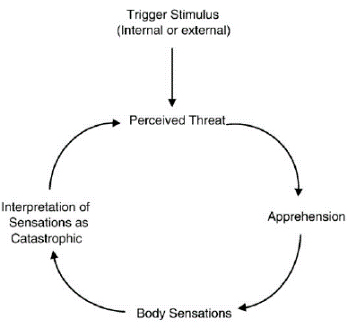
Panic Attacks What They Are And What To Do About Them Openlearn Open University
Comprehensive learning theory of panic.

. Two of the earliest theories were actually developed independently but at roughly the same time. The initial attacks become related to the internal and external cues which actually condition them to anxiety. Because anxiety is conditioned to internal cues panic attacks can seem to come out of nowhere.
One current comprehensive learning theory perspective on the etiology of panic disorder avoids these limitations and builds on the growing understanding of these distinc-tions as well as on advances in the study of classical condi-tioning. Continuous monitoring of panic attacks and anxious cognitions. Cite this document Summary.
The comprehensive learning theory suggests that initial panic attacks cause conditioning of anxiety to internal and external cues. Early theories that proposed a role for classical conditioning were criticized on several grounds. In a process called.
Several theories of the development of panic disorder PD with or without agoraphobia have emerged in the last 2 decades. Information on the Causes and Symptoms of Panic Disorder. Early theories that proposed a role for classical conditioning were.
A new offshoot of CBT known as Acceptance and Commitment Therapy ACT has also been found effective in treating panic. Panic disorder has been modeled in terms of the negative valence systems domain in the Research Domain Criteria initiative. Panic disorder is caused by essential emotional concepts of anxiety and panic.
Anxiety is accompanied by apprehension worry and tension Panic is accompanied by strong autonomic arousal. Anxiety then is created in the presence of these cues leading to more panic attacks. Several theories of the development of panic disorder PD with or without agoraphobia have emerged in the last 2 decades.
Because anxiety is conditioned to internal cues panic attacks can seem to. Several theories of the development of panic disorder PD with or without agoraphobia have emerged in the last 2 decades. Symptoms of a panic attack include shortened breaths dizziness thoughts of going wild loss of control and chest pains.
Learning theory argues that the person goes through two types of conditioning interoceptive and exteroceptive. IMPLICATIONS A theory that considers the adaptive functions of panic attacks can explain many aspects of panic and agoraphobia that other theories cannot. Following a brief description of the cognitive theory of panic a series of experiments that were designed to test the theory are reported.
The extension of current models combines cognitive-behavioral and psychodynamic concepts and techniques and suggests that exposure in vivo used for agoraphobic situations and interoceptive exposure used for. In the comprehensive learning theory of panic disorder a person undergoes classical conditioning - such as Ivan Pavlov discovered when his dogs began to salivate reflexively to the sound of a metronome that was always ticking when the dogs ate. Psychoeducation - Identify and name the patients symptoms.
A panic attack consists of an intense feeling of apprehension or impending doom which is of sudden onset and. The comprehensive learning theory of panic disorder the cognitive theory of panic perceived control and anxiety sensitivity safety behaviors and the persistence of panic cognitive biases and the maintenance of panic. Since the beginning of recorded history characteristics of panic disorder PD have been noted.
Download conference paper PDF References. Panic disorder is one of the most treatable anxiety disorders. Cognitive Behavioral Therapy is 70 to 90 percent effective as a treatment for panic disorder.
A logical extension of this was the development of cognitive models of panic disorder. Compare and Contrast the LearningConditioning Theory with Cognitive Models of Panic Disorder - Essay Example. TREATING PANIC DISORDER 13 Cognitive behavior therapy CBT may include the following components.
A panic attack Criteria A can be conceptualized as a prototypical expression of a fear response to an acute internal threat stimulus while concerns and worries about the consequences of panic attacks Criteria B can be conceptualized as. The attack may also be caused by recurrent unexpected encounters with a scary experience or disturbing event. An evolutionary explanation for panic and agoraphobia is not an alternative to proximate theories.
The limitations of the cognitive model and cognitive-behavioral therapy were discussed and an extension of current models was proposed. These keywords were added by machine and not by the authors. It is rather the necessary other half of a complete explanation of any biological phenomenon.
Many panic sufferers have questions and concerns about their symptoms. However each criticism can be met and rejected when one considers current perspectives on conditioning and associative learning. Modern ideas of PD evolved simultaneously in the.
- Provide a direct explanation of the basis for the symptoms. Neurobiological research supports this distinction Fanselow 1994. The prcsent article provides an overview of this work.
Add to wishlist Delete from wishlist. Early theories that proposed a role for classical conditioning were criticized on several grounds. This process is experimental and the keywords may be updated as the learning algorithm improves.
Bouton Mineka and Barlow 2001 hypothesized that initial panic attacks become associated with initially. Comprehensive Learning Theory VS Cognitive Theory Of Panic Disorder. Clark 1986 and Barlow 1988 developed models that have a good.
The cognitive treatment of panic is then briefly described followed by a review of. Through psychoeducation your therapist can help reduce some of your worry by thoroughly explaining the causes of panic disorder and. Barlow DH in press Current models of panic disorder and a view from emotion.
- Outline a plan for treatment. Anxiety and Panic Bouton et als contemporary learning theory perspective states that anxiety and panic are at least partially unique emotional experiences. The comprehensive learning theory suggests that initial panic attacks cause conditioning of anxiety to internal and external cues.
There are a couple of theories about the development of panic disorder. However each criticism can be met and rejected when one considers current perspectives on conditioning and associative learning. Psychoeducation can assist you in learning all of the common FAQs about panic disorder.
The more intense the anxiety more robust the conditioning will occur. Anxiety then is created in the presence of these cues leading to more panic attacks. Psychologists have a long record of interest in issues relating to fear and anxiety.
The prevailing treatment is cognitive behavioral therapy CBT. The result of the experiments generally support the theory.
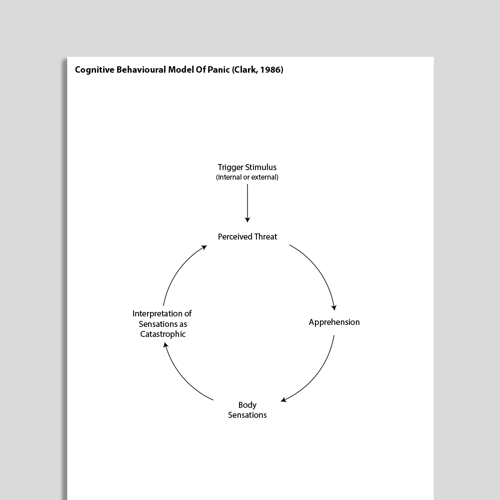
Cognitive Behavioral Model Of Panic Clark 1986 Psychology Tools
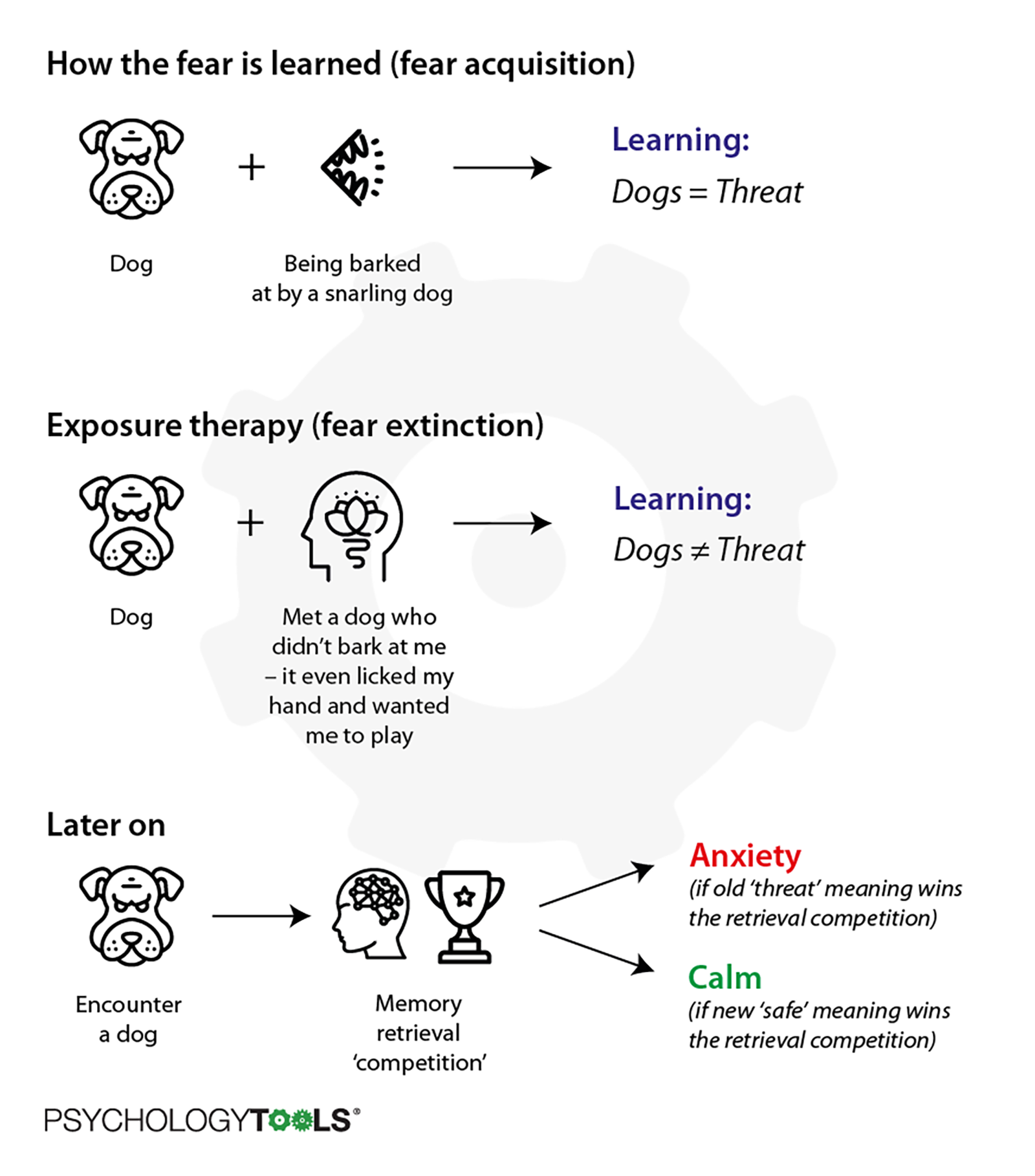
Delivering More Effective Exposure Therapy In Cbt Psychology Tools

Pdf A Contemporary Learning Theory Perspective On The Etiology Of Anxiety Disorders It S Not What You Thought It Was
Pdf A Contemporary Learning Theory Perspective On The Etiology Of Anxiety Disorders It S Not What You Thought It Was


Comments
Post a Comment